Content CZ MobileSoft AppBlock FileProvider Cache Blank HTML – Meaning, Causes, and Why This Error Appears
The keyword content cz mobilesoft appblock fileprovider cache blank html appears in searches when users encounter a confusing technical string—often while using an Android device. This phrase typically surfaces in error dialogs, logs, or when an app displays a blank screen instead of expected content.
This detailed article explains content cz mobilesoft appblock fileprovider cache blank html in clear, practical terms. It breaks down each part of the phrase, explains why the issue happens, what it usually means for users, and how such errors commonly arise in Android environments.
Breaking Down the Phrase
Understanding this keyword starts with separating its components:
content://
This indicates an Android content URI, a secure way for apps to share files or data with other apps.
cz.mobilesoft.appblock
This is the package name for the AppBlock application developed by MobileSoft, commonly used for app blocking, productivity, or digital wellbeing.
fileprovider
FileProvider is an Android system component that lets apps safely expose files (like cached HTML) to other apps without revealing full file paths.
cache
This refers to temporary stored data. Apps use cache to load content faster or generate temporary files.
blank html
This indicates an HTML file that loads with no visible content, either because it failed to render or contains no usable markup.
Put together, the phrase describes an Android scenario where AppBlock attempts to load cached HTML content through FileProvider, but the result is an empty or blank page.
What Does This Error Usually Mean?
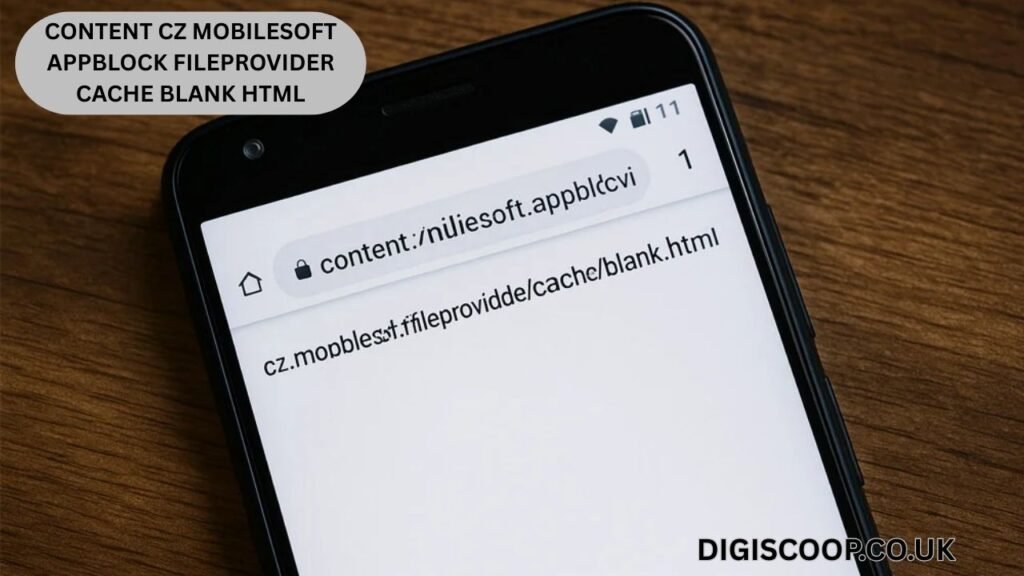
The message content cz mobilesoft appblock fileprovider cache blank html typically means:
An internal AppBlock-generated HTML file failed to load correctly
The app attempted to display a cached web-based screen
The HTML file exists but contains no content
Rendering failed due to a system or permission issue
In short, the app tried to show something—but nothing appeared.
Why AppBlock Uses HTML Files
Many Android apps, including AppBlock, use HTML-based interfaces for:
Informational screens
Blocking notices
Usage summaries
Temporary overlays
These are often rendered using Android WebView, which relies on cached HTML files.
Common Causes of the Blank HTML Issue
Several technical reasons can trigger this problem.
Corrupted Cache
If cached files are damaged or incomplete, the HTML may load as blank.
Interrupted App Update
An update that didn’t complete properly can leave placeholder files without content.
WebView Rendering Failure
Android WebView issues can prevent HTML from displaying.
Permission Conflicts
If FileProvider permissions are disrupted, the file may be inaccessible.
Storage or Memory Constraints
Low storage or memory pressure can prevent content generation.
When Users Usually Encounter This
Users may see content cz mobilesoft appblock fileprovider cache blank html when:
Opening AppBlock after an update
Trying to view blocked-app notifications
Accessing usage or restriction summaries
Switching between user profiles
Restoring data from backup
The issue is usually unexpected and confusing.
Is This a Virus or Security Threat?
No. This message is not a virus, malware alert, or hacking attempt. It is a technical reference generated by the Android system and AppBlock.
However, it can look alarming because:
It exposes internal app paths
It uses developer-style language
It appears without explanation
But it is almost always harmless.
Why the Message Looks So Technical
Android apps often log or display raw internal references when something fails unexpectedly. These messages are designed for developers, not end users, which is why they appear cryptic.
Why Search Engines Show This Exact Phrase
Search engines index this phrase because:
Users copy it exactly as shown
It appears verbatim in error messages
Multiple users encounter similar issues
This turns a technical string into a searchable keyword.
Temporary vs Persistent Occurrence
Temporary
Often caused by a short-term glitch and may resolve after:
Restarting the app
Restarting the phone
Waiting for background processes to finish
Persistent
May indicate:
Corrupted cache
App compatibility issues
System WebView problems
Persistent cases may require troubleshooting.
How Users Commonly Try to Fix It
While causes vary, users often attempt:
Clearing the app cache
Restarting the device
Reopening the affected screen
Updating the app
Ensuring Android WebView is updated
These actions address the most common triggers.
Why FileProvider Is Involved
FileProvider is used because Android restricts direct file access between apps. AppBlock uses FileProvider to:
Generate temporary HTML files
Display them securely
Avoid exposing raw file paths
If FileProvider encounters issues, content may not render.
Role of Android WebView
HTML rendering depends heavily on Android WebView. If WebView:
Is outdated
Is disabled
Has crashed
HTML screens may appear blank.
Does This Affect AppBlock Functionality?
Usually, core blocking features still work. The issue mainly affects:
Visual notifications
Information screens
Overlay messages
The app’s primary purpose often remains intact.
Why Such Errors Are More Common Today
Modern Android apps:
Rely on dynamic content
Generate UI from HTML
Use layered security models
More complexity means more potential failure points.
When to Be Concerned
You may need further action if:
The issue persists for days
Multiple screens fail to load
AppBlock becomes unusable
Other apps show similar errors
Otherwise, it’s typically minor.
How Developers View This Issue
From a developer perspective, this indicates:
A missing or empty cached file
A rendering pipeline issue
A need for better error handling
It is usually logged internally for debugging.
Common Misconceptions
- It is not spyware
- It is not data theft
- It is not system corruption
- It is not a user mistake
It is a technical rendering issue.
Why the Term “Blank HTML” Matters
The phrase blank html confirms:
The file exists
The system attempted to load it
The file contains no visible content
This narrows the problem to rendering or file generation.
Key Takeaways About Content CZ MobileSoft AppBlock FileProvider Cache Blank HTML
- It is an Android AppBlock internal error reference
- It relates to cached HTML content failing to render
- It is not dangerous or malicious
- It is usually temporary
- It reflects app or system-level rendering issues
These points help demystify the message.
Conclusion on Content CZ MobileSoft AppBlock FileProvider Cache Blank HTML
The keyword content cz mobilesoft appblock fileprovider cache blank html represents a technical Android message that appears when AppBlock attempts to load cached HTML content and fails to display it. While the wording looks complex and alarming, it usually signals a minor internal issue rather than a serious problem.
Understanding that this message comes from Android’s FileProvider and WebView systems helps users stay calm and informed. In most cases, the issue resolves naturally or with basic troubleshooting, making it more of a technical inconvenience than a real concern.